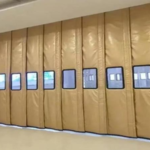
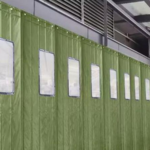
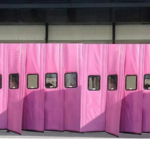
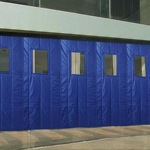
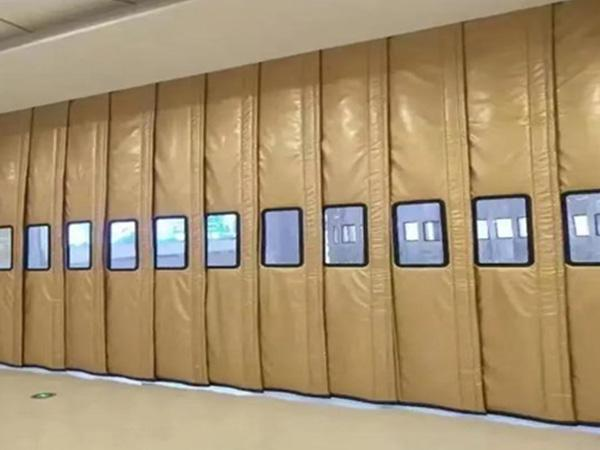
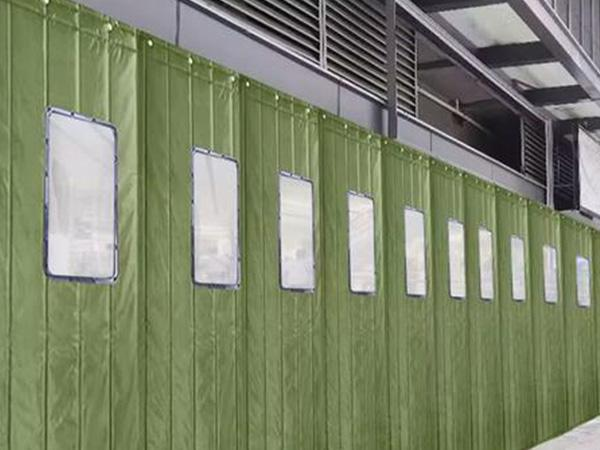
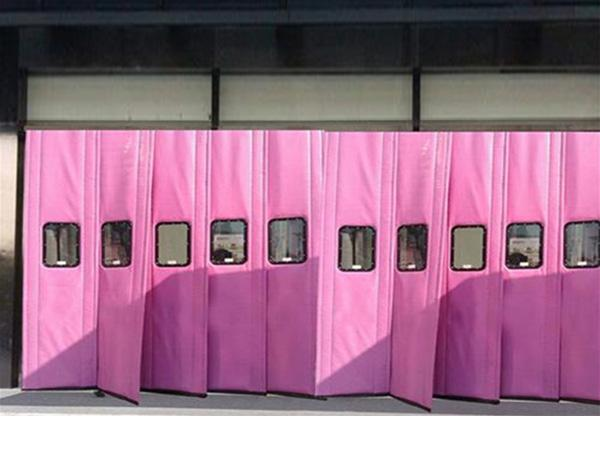
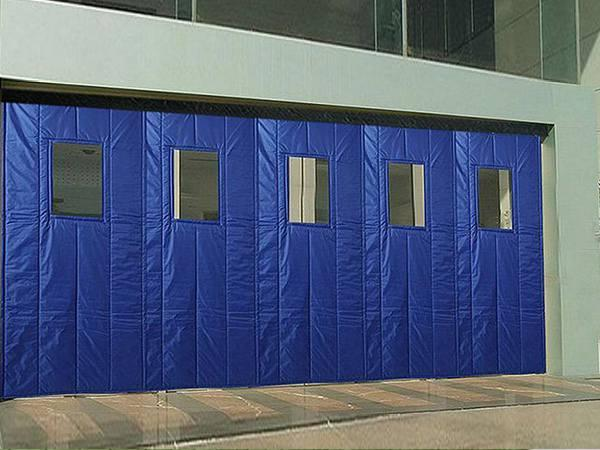
Fabrics (such as Oxford fabric, PVC-coated fabric, canvas, etc.) and the situation of people and vehicles on the opposite side. It features insulation, dustproofing, and wind resistance. Fixed frames such as galvanized, stainless steel, or aluminum alloy, or movable frames are used.
Insulated cotton door curtains are fabric door curtains specifically designed to improve insulation, windproofing, soundproofing, and dustproof performance in doorway areas. They are usually made of thickened cotton material or high-density fiber filling layers, with the outer layer often made of wear-resistant, waterproof, or windproof materials
Filled with insulation materials such as felt and fireproof cotton, made by cutting and sewing, or using magnetic strips or stacking on both sides. Various window frame models can be selected and directly sewn to create transparent windows, leaving the window for observation of people and vehicles opposite. It features insulation, dustproofing, and wind resistance. Fixed frames such as galvanized, stainless steel, or aluminum alloy, or movable frames are used.